
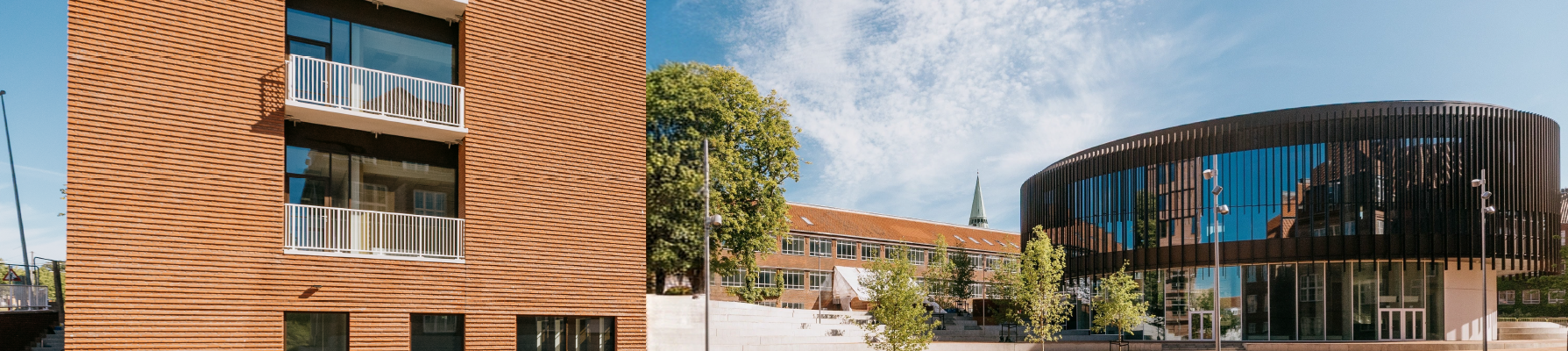
Aarhus
Aarhus – From Viking Trading Post to Modern Scandinavian City
Located on the eastern coast of Jutland, Aarhus is Denmark’s second-largest city and one of the country’s most attractive urban destinations. It is a place where deep history and modern Scandinavian life meet in a natural way. Today, Aarhus is known for its lively cultural scene, excellent museums, innovative architecture, strong university environment, and relaxed atmosphere. Although it is a major city, it still feels compact, walkable, and welcoming.
Aarhus is often described as a city with youthful energy, thanks in part to Aarhus University, which helps shape the city’s international and creative character. Students, researchers, entrepreneurs, and visitors all contribute to a dynamic urban environment filled with cafés, restaurants, festivals, and public life. At the same time, forests, beaches, and the sea are never far away, giving Aarhus a high quality of life that combines city living with easy access to nature.
A City with Viking Roots
Aarhus began as Aros, a Viking settlement founded around the mouth of the Aarhus River more than 1,200 years ago. Its location made it ideal for trade and transport, and during the Viking Age it developed into a fortified settlement and an important local trading centre. Aarhus is therefore connected to the Vikings not only through myth and imagery, but also through its genuine historical role in trade, craftsmanship, and early urban life.
This Viking heritage is still visible in the city today. Archaeological discoveries have shown how central early Aarhus was in the Viking period, and visitors can explore this past at the Viking Museum in central Aarhus and at the Moesgaard Museum, which offers outstanding exhibitions on prehistory and Viking life.
One of the city’s most charming modern references to this heritage is its Viking-themed pedestrian traffic lights. At selected crossings in the city centre, the usual walking figure has been replaced by a small Viking carrying a shield and an axe. It is a playful reminder that Aarhus embraces its Viking history as part of its present-day identity.
What Aarhus Is Today
Modern Aarhus is a city of culture, education, design, and innovation. It has evolved from a historic trading town into an important regional centre for research, business, and the arts. The harbour area has been transformed in recent years into a striking new waterfront district, while the historic centre has retained its older streets, squares, and churches. This combination of old and new is one of the city’s greatest strengths.
The city is also known for its strong cultural identity. In 2017, Aarhus was named a European Capital of Culture, a title that reflected its growing international reputation. Today, visitors find a city that feels both cosmopolitan and approachable, with a strong sense of local pride and a high standard of urban design.
Main Attractions in Aarhus
Aarhus offers an impressive range of attractions for a city of its size. Among the most important are:
- ARoS Aarhus Art Museum, one of Northern Europe’s most famous art museums, known especially for Olafur Eliasson’s circular rooftop installation Your rainbow panorama.
- Den Gamle By, an open-air museum recreating Danish urban life from earlier centuries.
- Moesgaard Museum, which combines impressive architecture with world-class exhibitions on archaeology and anthropology.
- The Latin Quarter, the oldest part of the city, full of small streets, shops, and cafés.
- Aarhus Ø, the modern waterfront district known for its contemporary buildings and harbour views.
- Aarhus Cathedral, Denmark’s longest church and one of the most important historic landmarks in the city.
Aarhus: A City of History and Everyday Life
What makes Aarhus especially attractive is the way it balances history and everyday life. The city centre is lively without feeling overwhelming, and visitors can easily move from a medieval church or a Viking museum to a modern art museum, a harbour promenade, or a relaxed café by the river. Aarhus therefore offers not only individual sights, but also a coherent experience of a city that has developed continuously from the Viking Age to the present.
More than 1,200 years after its beginnings as Aros, Aarhus remains a place of exchange — of goods in the past, and of ideas, culture, and knowledge today. That continuity helps explain why the city is so distinctive: it is deeply rooted in history, but at the same time unmistakably modern.
For more information on attractions, events, and practical visitor information, see the official tourism website: VisitAarhus.
Photo Gallery

Photo: Dannyps / Wikimedia Commons
License: CC BY-SA 4.0

Photo: SmartDrones Aarhus / Wikimedia Commons
License: CC0 1.0 (public domain dedication)

Photo: Teake Oppewal / Wikimedia Commons
License: Public domain (released by the copyright holder)

Photo: RhinoMind / Wikimedia Commons
License: CC BY-SA 4.0

Photo: Fugit hora / Wikimedia Commons
License: CC BY-SA 4.0

Photo: Smartdrones Aarhus / Wikimedia Commons
License: CC0 / Public Domain
Image Credits and Source Pages
- Viking pedestrian light: Traffic light detail in Aarhus.jpg
- Aarhus Ø: Aarhus Ø set fra syd.jpg
- ARoS: ARoS Aarhus Kunstmuseum.jpg
- Aarhus Cathedral: Aarhus Cathedral (Bispetorvet).jpg
- Den Gamle By: Den Gamle By indgang.jpg
- Moesgaard Museum: Moesgård Museum photographed from air.jpg